Random posting doesn't convert. Strategy does.
At Social Intern, we help brands turn scattered content into structured systems that align with audience funnels, campaign cadence, and measurable KPIs. When you build the right content pillars, supported by a balanced content mix and a clear editorial calendar, you move from reactive posting to predictable growth.
Looking to streamline execution? Pair your strategy with powerful social media management software to plan, schedule, and track pillar performance efficiently.
Let's break down the playbook.
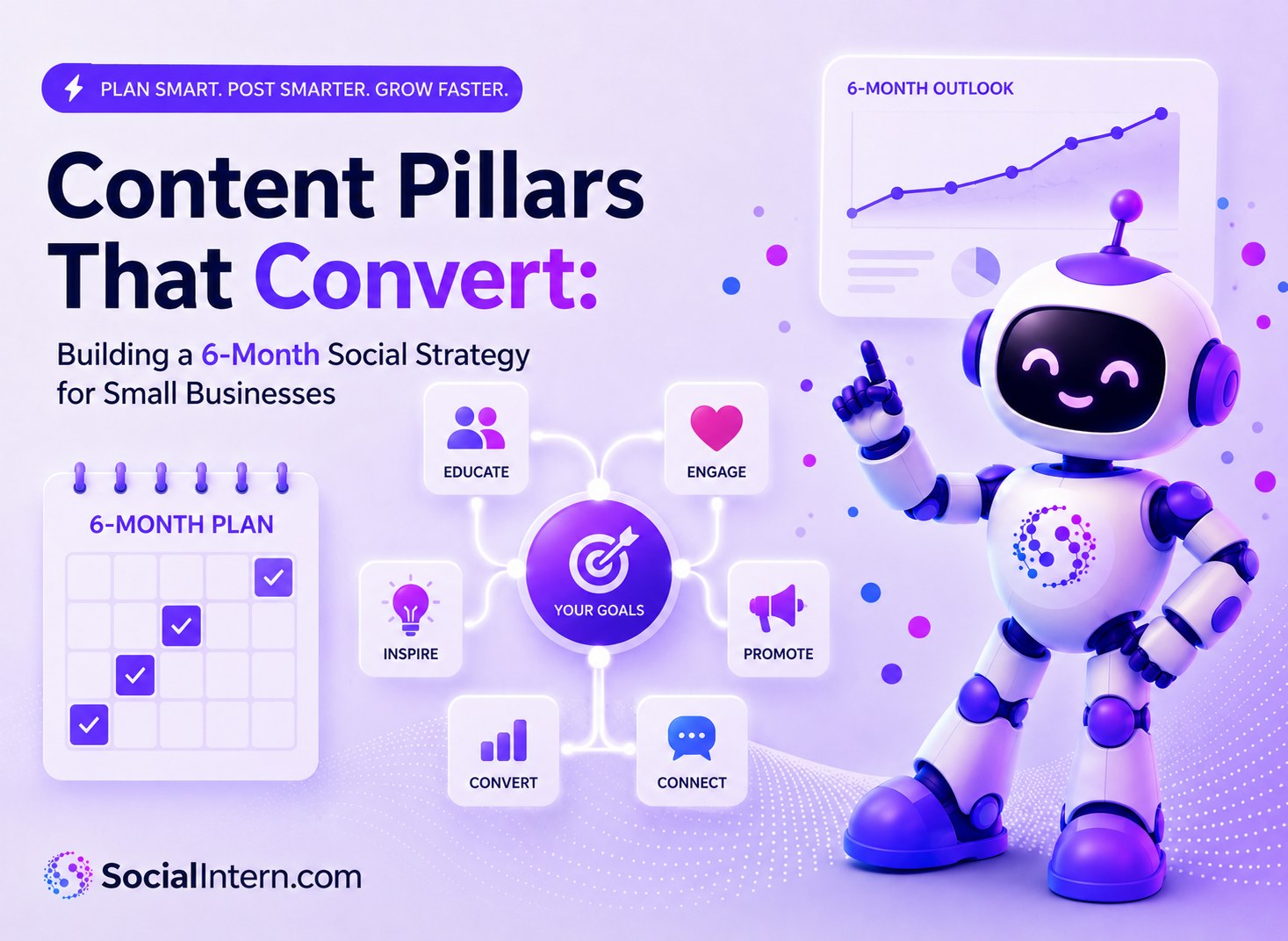
What are Content Pillars - And Why They Convert
Content pillars are 3–5 core themes that define what your brand consistently talks about online. They:
- Anchor your messaging
- Align content with business goals
- Build authority (E-E-A-T)
- Support funnel progression
- Improve content repurposing
Without pillars, you post content. With pillars, you build influence.
Why Most Small Businesses Struggle
Many businesses struggle because they post inconsistently, chase trends without strategic relevance, ignore audience funnel stages, lack a clear campaign cadence, and skip KPI tracking altogether. Without structure, content becomes reactive rather than intentional. The result is predictable: low engagement, weak conversions, and eventual burnout.
The solution lies in implementing a structured 6-month framework built around conversion-driven content pillars that align messaging, funnel stages, and measurable business goals.
Step 1: Define Business Goals Before Content
Before building pillars, define:
- Revenue target
- Lead generation goals
- Brand awareness objectives
- Community growth metrics
- Sales cycle length
Every pillar must map to a measurable outcome.
For example:
| Business Goal | Funnel Stage | KPI |
|---|---|---|
| Generate Leads | Consideration | Form submissions |
| Build Authority | Awareness | Saves & shares |
| Increase Sales | Conversion | Direct inquiries |
Strategy begins with clarity.
Step 2: Identify Your 4 Core Content Pillars
Here's a high-performing structure for small businesses:
1. Authority Pillar (Trust Builder)
Purpose: Establish E-E-A-T (Experience, Expertise, Authority, Trust)
Content Ideas:
- Case studies
- Data insights
- Industry breakdowns
- FAQs
- Behind-the-scenes expertise
KPI Focus: Saves, Shares, Website clicks
2. Education Pillar (Problem Solver)
Purpose: Solve audience pain points
Content Ideas:
- How-to posts
- Tutorials
- Frameworks
- Carousel guides
- Process explainers
KPI Focus: Engagement rate, Comments, Lead magnets downloads
3. Community Pillar (Relationship Builder)
Purpose: Humanise the brand
Content Ideas:
- Founder stories
- Customer testimonials
- Polls
- User-generated content
KPI Focus: Follower growth, DMs, Story replies
4. Offer Pillar (Revenue Driver)
Purpose: Drive conversions
Content Ideas:
- Service highlights
- Promotions
- Limited-time campaigns
- Before/after transformations
KPI Focus: Click-through rate, Conversion rate, Sales
Step 3: Build a Balanced Content Mix
Your content mix determines performance sustainability.
A healthy ratio:
- 40% Education
- 30% Authority
- 20% Community
- 10% Offer
Avoid over-promoting. Value builds demand.
Evergreen vs Trend Content: Finding Balance
| Content Type | What It Includes | Strategic Benefit |
|---|---|---|
| Evergreen Content | Timeless tips, Core expertise, Repurposable guides, SEO-friendly posts | Builds long-term trust, strengthens authority, and delivers sustainable traffic over time |
| Trend Content | Industry news, Viral formats, Platform updates, Seasonal campaigns | Boosts short-term visibility, increases reach, and helps tap into timely audience attention |
Best Practice: A powerful strategy blends both. Evergreen content establishes credibility and retention, while trend content amplifies reach and keeps your brand culturally relevant.
Step 4: Map Pillars to Funnel Stages
Your content should guide audiences from awareness to action.
| Funnel Stage | Content Type | Example |
|---|---|---|
| Awareness | Educational reels | "3 Mistakes Killing Your Reach" |
| Consideration | Case study carousel | Client transformation story |
| Conversion | Offer post | Free consultation CTA |
When you understand how to build social media content pillars aligned to funnel stages, you create predictable movement toward sales.
Step 5: Establish a 6-Month Campaign Cadence
Consistency builds authority.
Here's a recommended 6-month cadence:
Month 1–2:
- Awareness-heavy content
- Education & Authority focus
Month 3–4:
- Community building
- Lead magnets
- Email list growth
Month 5–6:
- Strong offer positioning
- Case studies
- Conversion-focused campaigns
Strategic repetition drives recognition.
Step 6: Create a 6-Month Editorial Calendar
An editorial calendar prevents content chaos.
Structure:
- Monthly theme focus
- Quarterly campaign anchor
- Clear KPI tracking
Example Weekly Layout:
- Monday – Education
- Wednesday – Authority
- Friday – Community
- Sunday – Offer (light CTA)
Batch planning saves time and improves clarity.
Step 7: Leverage Content Repurposing
One long-form piece can generate:
- 5 Instagram posts
- 3 LinkedIn posts
- 2 email newsletters
- 1 webinar topic
- 4 short-form videos
Content repurposing multiplies reach without multiplying workload.
Smart brands don't create more - they reuse strategically.
Pillar Example: Social Intern 6-Month Strategy
Here's how we might structure pillars internally:
Authority:
- Social media case studies
- Data-driven trend analysis
Education:
- "How to build social media content pillars" breakdowns
- Algorithm updates
Community:
- Client spotlights
- Founder journey stories
Offer:
- Strategy sessions
- Managed content packages
Each piece maps to KPIs tied to lead generation and revenue growth.
KPIs That Actually Matter
Avoid vanity metrics alone.
Track:
- Engagement rate
- Saves (authority signal)
- Website clicks
- Qualified leads
- Cost per acquisition
Data informs optimisation.
When to Bring in Experts
Building effective content pillars requires clear funnel mapping, strong brand positioning, consistent KPI tracking, structured campaign planning, and a platform-specific strategy tailored to where your audience spends time.
Without these foundational elements, even great content can fail to convert. If execution starts to feel overwhelming, bringing in strategic support can accelerate growth, streamline operations, and ensure your content efforts drive measurable business results.
Ready to Boost Your Startup with Social Content Services? Social Intern builds conversion-focused strategies tailored to your business goals.
The E-E-A-T Advantage
Google and social platforms prioritise:
- Demonstrated expertise
- Clear authority
- Real-world experience
- Trust signals
Authority is earned through consistency and depth.
Common Mistakes to Avoid
- Posting without KPI alignment
- Overusing promotional content
- Ignoring funnel stages
- Skipping analytics reviews
- Not adjusting campaign cadence
Strategy without optimisation is wasted effort.
The 6-Month Content Pillar Blueprint Summary
- Define business goals
- Identify 3–5 content pillars
- Balance your content mix
- Align with funnel stages
- Establish campaign cadence
- Build an editorial calendar
- Track KPIs & optimise
- Repurpose strategically
Master this framework and your content becomes a conversion engine.
Conclusion: Structure Creates Scale
When you understand how to build social media content pillars, you move from reactive posting to intentional, strategic growth. Instead of scrambling for ideas each week, you operate with clarity and purpose.
Over a six-month period, structured pillars help increase brand authority, improve engagement quality, shorten sales cycles by nurturing audiences effectively, boost conversions through funnel alignment, and significantly reduce content stress by creating a repeatable system that scales.
At Social Intern, we don't just create posts - we build systems that scale.
Contact us today. Let's turn your content into consistent revenue.
Frequently Asked Questions
Typically 3–5 pillars provide enough variety while maintaining clarity and consistency.
A 6-month strategy allows enough data collection to optimize effectively.
Pillars define themes. Content mix refers to the percentage distribution of those themes.
Monthly reviews are recommended, with quarterly deep strategy evaluations.
Both are important. Evergreen builds authority, while trend content increases visibility.